Earlier this month I took a drive with a friend through the Skyline Drive in Western Virginia, enjoying the spectacular views looking either east towards Virginia horse and vineyard country or west over the Shenandoah Valley towards the Blue Ridge Mountains and the further Appalachians, from the roadways many turnouts on either side of the road. There are also hiking trails peppered throughout the high-elevation national park, including a portion of the Appalachian Trail.
Wildlife abounds there too, as in prior years we had seen several deer. This year we were treated to the sight of a black bear sauntering casually across the road.
On the west side on a clear day you can look out over the beautiful Shenandoah Valley, the scene of much desperate fighting during the Civil War, the place where Confederate General Stonewall Jackson created his status as an icon of the Old South by outfoxing and routing larger Union Forces several times in his famous Valley Campaign in 1862, which is still studied at military academies as an example of speed and elusiveness combining with uncertainty about the enemy's intent to create an air of self-fulfilling defeatism in the minds and actions of opposing generals. Sundowns are spectacular from those heights.
On the east side you look out over Virginia horse and vineyard country, and the site of still further desperate Civil War clashes in the area known during the War of Northern Aggression as Mosby's Country, a land of guerrilla warfare where Rebel irregulars bushwhacked Union supply wagons and killed Yankee sentries and messengers and the occupying troops strung up the armed partisans on the spot if they caught them before they faded back into their farms and hardscrabble civilian life. There are Rebel statues outside most county courthouses there even now.
Showing posts with label Civil War. Show all posts
Saturday, November 23, 2019
Wednesday, July 17, 2019
My summer vacation
Nothing could compare to being in Normandy in April and treading upon the very beaches where giant men from America, Britain and Canada stormed ashore on June 6, 1944 and thrust a dagger into the heart of Nazi Germany. But my seven-day 2500-mile car trip through five states had its salient moments, most notably in visiting with my sister and her family in Corolla, NC, visiting with my college roommate in Vandemere, NC, and visiting with my best friend in ninth grade at Staten Island Academy before I went off to boarding school. (My nephew, my sister, and my friend from CU.)
When I visit the south, I like locating the town square and seeing its usual statue of a Rebel sentry, and reading that town's notion of why the war was fought on its base, because of my interest in the Civil War. I do the same thing in northern towns. (Ellaville's Rebel sentinel, still on duty.)
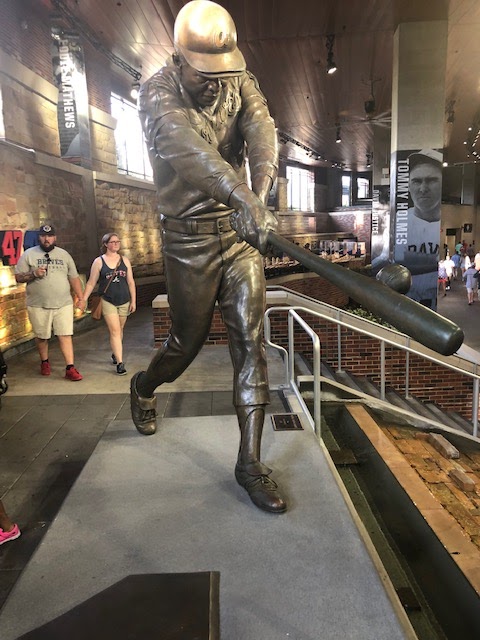
The major-league baseball game I saw in Atlanta's new baseball stadium in a Cobb County suburb far from downtown was fun, and I was glad to see a Bryce Harper home run, but that park isn't in the hallowed spirit of hoary baseball because it has no connection to Atlanta anymore, it's just a suburbanite's destination site for an evening of expensive entertainment. What kept me going alone in my car during the hours of driving wasn't Siri giving me often wrong directions as I tooled along the highways but my Sirius radio subscription, listening to rock and roll songs on the Classic Vinyl station, till I discovered the same songs would be played each day at about the same time, so I switched over to the Comedy Channel which didn't suffer from day after repetition. (Hammerin' Hank's statue is inside SunTrust Park, you'll have to get there by car, pay for parking and purchase a ticket that can be displayed on your hand-held device to see it.)
The best part of my vacation, beside seeing people dear to me, was my trip to the site of the Andersonville Civil War POW camp, because it was so haunting to be in a place with so many displaced souls (thousands of Union soldiers perished there) and at a place where heroes, giant men, trod. I also liked visiting the D-Day Memorial and Appomattox in Virginia, again because I was following the path of giant men who altered history not too long ago. (A beautiful sunrise in NC.)
When I visit the south, I like locating the town square and seeing its usual statue of a Rebel sentry, and reading that town's notion of why the war was fought on its base, because of my interest in the Civil War. I do the same thing in northern towns. (Ellaville's Rebel sentinel, still on duty.)
The major-league baseball game I saw in Atlanta's new baseball stadium in a Cobb County suburb far from downtown was fun, and I was glad to see a Bryce Harper home run, but that park isn't in the hallowed spirit of hoary baseball because it has no connection to Atlanta anymore, it's just a suburbanite's destination site for an evening of expensive entertainment. What kept me going alone in my car during the hours of driving wasn't Siri giving me often wrong directions as I tooled along the highways but my Sirius radio subscription, listening to rock and roll songs on the Classic Vinyl station, till I discovered the same songs would be played each day at about the same time, so I switched over to the Comedy Channel which didn't suffer from day after repetition. (Hammerin' Hank's statue is inside SunTrust Park, you'll have to get there by car, pay for parking and purchase a ticket that can be displayed on your hand-held device to see it.)
The best part of my vacation, beside seeing people dear to me, was my trip to the site of the Andersonville Civil War POW camp, because it was so haunting to be in a place with so many displaced souls (thousands of Union soldiers perished there) and at a place where heroes, giant men, trod. I also liked visiting the D-Day Memorial and Appomattox in Virginia, again because I was following the path of giant men who altered history not too long ago. (A beautiful sunrise in NC.)
Tuesday, July 16, 2019
Virginia
And so my seven day car trip came to an end after my last stop at...Appomattox, the tiny hamlet where the Civil War came to an end and America was assured to be a world superpower and free. Lee signed the surrender terms on the afternoon of April 9, 1865, men died on both sides on the morning of the ninth. (The Confederate Cemetery at Appomattox; it has an unknown Union soldier buried there also with an American flag at his gravesite.)
The great war was over and the southern men made their way south to return home in the best way they could, the trek of the vanquished. But they soon set about terrorizing the freedmen of their communities and instituted another century of slave-like Jim Crow dominance before federal power finally broke to pieces the ways of the past. (The Civil War ended here, at the McLean Hose behind me.)
In wandering about the McLean house yard, in which the armistice was signed in its parlor, where the slave quarters were behind the main house, the obscene difference between the single room with loft shack out back and the mass'a's 3-storey house was stark. A South American couple was examining the placards describing the conditions of lifetime enforced servitude and I could sense their disapprobation and I felt embarrassed to be an American. (The big house and the shack in back.)
But slavery was abolished there at Appomattox, in effect, and the great country was bound up to heal from its divisions. A century and a half later, after yet another great war and many, many little ones, are we better now? (The slave quarters at the McLean House.)
The great war was over and the southern men made their way south to return home in the best way they could, the trek of the vanquished. But they soon set about terrorizing the freedmen of their communities and instituted another century of slave-like Jim Crow dominance before federal power finally broke to pieces the ways of the past. (The Civil War ended here, at the McLean Hose behind me.)
In wandering about the McLean house yard, in which the armistice was signed in its parlor, where the slave quarters were behind the main house, the obscene difference between the single room with loft shack out back and the mass'a's 3-storey house was stark. A South American couple was examining the placards describing the conditions of lifetime enforced servitude and I could sense their disapprobation and I felt embarrassed to be an American. (The big house and the shack in back.)
But slavery was abolished there at Appomattox, in effect, and the great country was bound up to heal from its divisions. A century and a half later, after yet another great war and many, many little ones, are we better now? (The slave quarters at the McLean House.)
Sunday, July 14, 2019
Chattanooga
On the penultimate day of my 2500 mile car trip through five states, I toured the Civil War battlefield of Chickamauga in Georgia, where in September 1863, Union General George Thomas, a Virginian, earned the permanent sobriquet of The Rock Of Chickamauga when he saved the Union army from destruction with a heroic stand upon Snodgrass Hill a few miles outside of Chattanooga after the army was sent reeling in disarray during the battle when a gap inadvertently, due to a confusing set of order, opened in its battle line. Thomas organized a defensive line among disorganized fleeing troops upon the high ground in the background of the picture below and held the position until nightfall, when the army retired to Chattanooga where it was besieged by the Rebel army.
The dominant position in the siege of Chattanooga was on lookout Mountain in Georgia, just south of the city, where Rebel artillery made the Yankee position below practically untenable. However, U.S. Grant was appointed commander of the Union army in Chattanooga, and with forces he brought with him from his own army which had just captured Vicksburg, he drove the Rebels away in the Battle Above The Clouds on Missionary Ridge and Lookout Mountain in November 1863, thus opening up the Deep South to the Union invasion which occurred the next spring with General William Sherman's army's march through Georgia to Atlanta.
The picture below taken from downtown Chattanooga shows how Lookout Mountain dominates the landscape. In the city I also visited the National Cemetery and stopped at a few jazz sites before I headed northwest through central Tennessee to return to Virginia.
Along the way I saw a nice rainbow, although it signified encountering rain on the drive. The next day I wished to see a couple of landmark sites in Virginia before I returned home.
The dominant position in the siege of Chattanooga was on lookout Mountain in Georgia, just south of the city, where Rebel artillery made the Yankee position below practically untenable. However, U.S. Grant was appointed commander of the Union army in Chattanooga, and with forces he brought with him from his own army which had just captured Vicksburg, he drove the Rebels away in the Battle Above The Clouds on Missionary Ridge and Lookout Mountain in November 1863, thus opening up the Deep South to the Union invasion which occurred the next spring with General William Sherman's army's march through Georgia to Atlanta.
The picture below taken from downtown Chattanooga shows how Lookout Mountain dominates the landscape. In the city I also visited the National Cemetery and stopped at a few jazz sites before I headed northwest through central Tennessee to return to Virginia.
Along the way I saw a nice rainbow, although it signified encountering rain on the drive. The next day I wished to see a couple of landmark sites in Virginia before I returned home.
Saturday, July 13, 2019
Dalton
Leaving Andersonville National Historical Park in central Georgia mid-afternoon on the Fourth, I drove west across Georgia on Highway 26 before turning north on Interstate 85/75 to drive to the Tennessee border so I could tour the Chickamauga and Chattanooga Civil War battle sites the next day. At Ellaville on the highway to the west I came across a Rebel sentry guarding a raft of Amrrican flags planted in the city square for the Fourth.
A few miles further west I stopped at the town hall square in Buena Vista to read the myriad monuments on its grounds. One ballyhooed the "Poet and Confederate Hero, author of the Great Poem 'All Quiet on The Potomac Tonight'"Thaddeus Oliver, who died in 1864 during the war at age 38, and another was proudly dedicated by the Marion County High School class of 1971, the first "intergrated" class as mandated by federal legislation.
Far north in Dalton I encountered a statue of Confederate General Joseph Johnston downtown, who harassed Sherman's army on its drive from Chattanooga to Atlanta, and then again after Sherman's March to the Sea that made Georgia howl and, basically, made the morally bankrupt Confederacy lose the war as the Union eastern armies manned the trenches outside of Richmond and Petersburg.
On the top of a hill just west of downtown Dalton was a cemetery with a small, lonely part enclosed as the Confederate Cemetery, with a Rebel sentinel watching over 425 graves of Confederate soldiers and four unknown Union soldiers, victims of nearby battles. Meanwhile at the Whitaker County Courthouse, acres of American flags were planted on its lawn and along the main avenue, with no tanks in evidence as the proud banners waved gently in the cooling breeze.
A few miles further west I stopped at the town hall square in Buena Vista to read the myriad monuments on its grounds. One ballyhooed the "Poet and Confederate Hero, author of the Great Poem 'All Quiet on The Potomac Tonight'"Thaddeus Oliver, who died in 1864 during the war at age 38, and another was proudly dedicated by the Marion County High School class of 1971, the first "intergrated" class as mandated by federal legislation.
Far north in Dalton I encountered a statue of Confederate General Joseph Johnston downtown, who harassed Sherman's army on its drive from Chattanooga to Atlanta, and then again after Sherman's March to the Sea that made Georgia howl and, basically, made the morally bankrupt Confederacy lose the war as the Union eastern armies manned the trenches outside of Richmond and Petersburg.
On the top of a hill just west of downtown Dalton was a cemetery with a small, lonely part enclosed as the Confederate Cemetery, with a Rebel sentinel watching over 425 graves of Confederate soldiers and four unknown Union soldiers, victims of nearby battles. Meanwhile at the Whitaker County Courthouse, acres of American flags were planted on its lawn and along the main avenue, with no tanks in evidence as the proud banners waved gently in the cooling breeze.
Friday, July 12, 2019
Andersonville
Rather than hang around the District on the Fourth to listen to an oversized kindergartener give his version of the Revolutionary War, with real tanks as props, I left Atlanta the morning after I saw a ballgame at the Braves' new ballpark the evening before and drove to Andersonville, Georgia, to pay my respects to the thousands of Union POWs buried at the National Cemetery there, on the grounds of the notorious Andersonville Prisoner of War camp during the Civil War. 33,000 POWS were kept there within the wooden stockade during the last year of the war, without shelter from the elements and with little food and foul water, and 13,000 died, and many of the rest including, I think, a relative of mine, suffered from ailments because of their captivity there for the remainder of their reduced lifespan. (33,000 men occupied this field, within a wooden palisade, without shelter and scant food, drinking the polluted water trickling trough the ravine cutting across the field, downriver from the Rebel guards' camp, with only the clothes they arrived with.)
The open-air prison contained no officers, only non-coms, and military order quickly broke down and a hideous lawlessness reigned inside the camp, perpetrated by the Raiders, a gang essentially that preyed upon individual soldiers or prison newcomers who had not yet formed bonds with anyone, robbing, beating and killing them. These predators were opposed by the formation of a reprisal gang called the Regulators who identified the lot and especially the ringleaders and reported on them to the camp commandant, Major Henry Wirz (who was the only Confederate tried and executed after the war as a war criminal). (The six predatory gang leaders within the prison camp were hanged by their peers after a trial and buried apart from the thousands upon thousands of Union soldiers who perished from the inhumane conditions within the POW camp.)
Wirz arrested the identified Raiders, kept them apart from the main population while a military tribunal made up of inmates inside the prison put them on trial and delivered the six ringleaders back to the prisoners after a sentence of death by hanging was imposed upon them by their peers, who hanged them inside the prison on July 11, 1864. A raider leader named Patrick Delaney uttered his last words, "I would rather be hanged than to live the way most prisoners have to live." (The Raiders are hanged for their crimes.)
The six executed men were buried apart from the rest of the Union men in the burial grounds. Today a Union sentry stands vigilant guard over the thousands of men within the cemetery who gave their last full measure of devotion to the freedom we enjoy, for now. (Ever faithful to democracy, despite the individual cost.)
The open-air prison contained no officers, only non-coms, and military order quickly broke down and a hideous lawlessness reigned inside the camp, perpetrated by the Raiders, a gang essentially that preyed upon individual soldiers or prison newcomers who had not yet formed bonds with anyone, robbing, beating and killing them. These predators were opposed by the formation of a reprisal gang called the Regulators who identified the lot and especially the ringleaders and reported on them to the camp commandant, Major Henry Wirz (who was the only Confederate tried and executed after the war as a war criminal). (The six predatory gang leaders within the prison camp were hanged by their peers after a trial and buried apart from the thousands upon thousands of Union soldiers who perished from the inhumane conditions within the POW camp.)
Wirz arrested the identified Raiders, kept them apart from the main population while a military tribunal made up of inmates inside the prison put them on trial and delivered the six ringleaders back to the prisoners after a sentence of death by hanging was imposed upon them by their peers, who hanged them inside the prison on July 11, 1864. A raider leader named Patrick Delaney uttered his last words, "I would rather be hanged than to live the way most prisoners have to live." (The Raiders are hanged for their crimes.)
The six executed men were buried apart from the rest of the Union men in the burial grounds. Today a Union sentry stands vigilant guard over the thousands of men within the cemetery who gave their last full measure of devotion to the freedom we enjoy, for now. (Ever faithful to democracy, despite the individual cost.)
Subscribe to:
Posts (Atom)