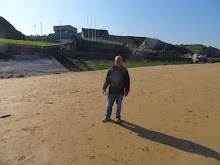
I recently ran the monthly running of the noontime Tidal Basin 3K. I've done over 90 of these races and this one was the most interesting by far.
You might know that I was recently elected president of my running club. Suddenly people come up to talk to me now, who never seemed to notice me before. Usually they want something. A president of another club I spoke with recently advised me to learn how to say "No." No, no, no.
This 3K race kicked off in the rain. I set off and as usual, another club member, a friend of mine who is faster than me, came up on me at about the quarter mile mark. But he didn't sweep by and steadily get ahead of me, as usual. No, no, no.
He fell in beside me and started talking to me. Now, I like to be social when I run. I talk to lots of people (except for those antisocial types wearing headphones).
But this friend wanted something from me, or rather, from the club. I won't get into what it was but there was nothing improper about his request (you can always ask). It's just that he wasn't going to get it. But he had plenty of time to make his case. Did I mention that he's faster than me?
As we ran side by side for long minutes while he went on about how the club could benefit from the synergies he could bring to it through this or that skill that he possessed, I ratcheted up my pace to my top speed, hoping that I could run away from him and save the conversation for later when I could concentrate. No dice, he just loped along, chatting me up easily.
I answered in one word gasps. I listened carefully, to make sure I didn't reflexively say, "Uh-huh" at an inauspicious moment. This was very taxing, both physically and mentally. I couldn't let this old familiar race just flow, as usual.
Whenever I took a straight line through the curves I had to dip behind him or else bang into him because he took the curves without cutting the corners. Once I left the sidewalk to cut across the roadway towards a far curve and we did collide and almost fell. It was nerve wracking.
With a quarter mile to go he lit out and finished many seconds ahead of me as usual. I breathed, or rather gasped, a sigh of relief as he left me behind.
Later when he said that he took my non-committal reticence to be a "No," I didn't dispute his perception. He imparted some wisdom then, saying, "I always say that you didn't ask a question if you won't accept no for the answer." No, no, no.
13:56 (7:29), 21/32, bottom third, a terrible race. It felt like I was a prisoner being escorted.
Saturday, April 18, 2009


Thursday, April 16, 2009
The first thing to go
I recently turned 57. I took the day off and at some point I went to the supermarket, a form of recreation for me. I was loading up my cart with the usual stuff, dented cans from the bargain bin, a banana, a 24-pack of half-liter water bottles, salmon, a Foster's, when I looked down and saw the cart I was pushing wasn't mine. Everything in it looked too healthy. Apparently, upon returning from some side trip down an aisle, I had just started pushing any old cart that was handy, and it didn't happen to be mine.
I went back several aisles and sure enough, there was a housewife wondering around with her arms loaded with food stuff, looking very annoyed, searching for her cart.
I sheepishly returned her cart to her and took mine, which was standing abandoned nearby. Then upon checking out a short while later, I realized that I no longer had my carton of water placed on the bottom shelf of my cart, just over the wheels. Ah, I thought, so that's where I took over the other cart temporarily, in the water aisle.
So I went looking for the housewife a second time, to ensure that she didn't inadvertently leave the store without noticing the water crate on the underside of her shopping cart. I found her in a checkout lane in an agitated discussion with the cashier about that very crate of water in her cart.
I wondered, as I sheepishly unloaded the miscreant water crate from underneath her cart, if short-term memory is the first thing to go.
Sunday, April 5, 2009
A Run on a Key
Lignum vitae wood is a dense wood heavier than water, which is used in boatmaking. Why I don't know, although Captain Jimmy told me. I forget now though. I guess it sinks, which doesn't seem like a desirable property for wood on a boat to me. (Right: I'm guessing that the reddish wood is lignum vitae.)
 used in boatmaking. Why I don't know, although Captain Jimmy told me. I forget now though. I guess it sinks, which doesn't seem like a desirable property for wood on a boat to me. (Right: I'm guessing that the reddish wood is lignum vitae.)
It's rare, but it's present on Lignumvitae Key. This 13 acre island is a state park, ac cessible only by boat. We put in there at the dock. Our visit was memorable for two reasons. The island had a bathroom. And I went for a run. (Left: The water from Lignumvitae Key.)
 cessible only by boat. We put in there at the dock. Our visit was memorable for two reasons. The island had a bathroom. And I went for a run. (Left: The water from Lignumvitae Key.)
The island has a house built by the island's former owner, which now serves as a visitors  center. The heavy vegetation of the island surrounds the open square that the house sits on. There is a road that runs around the island, through the brush. (Right: The wooded trail that runs around Lignumvitae Key.)
 center. The heavy vegetation of the island surrounds the open square that the house sits on. There is a road that runs around the island, through the brush. (Right: The wooded trail that runs around Lignumvitae Key.)
It felt good to be running down a road again after two days on a boat, even if it was a sandy trail closed in by a canopy of treetops. Also there were huge tough spiderwebs stretched across the road that I kept running  into. (Left: It was awfully quiet running on Lignumvitae Key.)
 into. (Left: It was awfully quiet running on Lignumvitae Key.)
Down the primary lane, I hit a T intersection against a stone wall. Turning right, I soon came to the end of the road upon a beach. The shallow blue waters of the keys beckoned me. A boat rode at anchor a quarter mile offshore. Those waters would be where we would spend th at night. (Right: The visitors center.)
 at night. (Right: The visitors center.)
Backtracking, I ran past my ingress point and ran on through the forest, skirting the small island I suppose. The only sounds were my soft footfalls on the sandy trail and my breathing. This was a run I really enjoyed.

Emerging back onto the open square fourteen minutes later, after a run of about 3K I guess, I loped off to the dock, sweating. My boat was casting off! Thanks for waiting, guys! (Left: Barry and Captain Todd came by to inspect our boat.)
The guys were covering for me! Evidently the park ranger was shooing us off the island. The daily tours had been cancelled, due to the Decider's economic debacle I suppose, and the park rangers hadn't changed the website to reflect that fact yet. The park was closed. My crew members kept telling the ranger they had to wait for a guy who was "in the bathroom" (me). (Right: Snorkeling by Lignumvitae Key.)
 reflect that fact yet. The park was closed. My crew members kept telling the ranger they had to wait for a guy who was "in the bathroom" (me). (Right: Snorkeling by Lignumvitae Key.)
I jumped aboard and we shoved off and sailed around to the back of the key and tied up to a mooring 400 yards off shore. Putting on our snorkel gear, we swam in to the shoreline. It was my  first time in the water down there and with the flippers, mask and snorkel, the half mile swim to the sho
 re and back came easily. (Left: Our 25 foot boat Spring Tide.)
 first time in the water down there and with the flippers, mask and snorkel, the half mile swim to the sho
 re and back came easily. (Left: Our 25 foot boat Spring Tide.)
Afterwards we rafted up with the other two boats and enjoyed an evening of socializing. Going back to our mooring before dark, we engaged in our ultimately unsuccessful quest to see the "green flash" as the sun sank into the sea. (Right: Jeffrey aboard his kayak.)
The snorkeling was nice but the run was wonderful. (Left: Sunset in t he Keys.)
 he Keys.)
Tuesday, March 31, 2009
How to Cook Salmon
Earlier this month I spent a week sailing the Florida Keys with 14 of my college friends or their S.O.s. in three boats. Two were 32 footers and the one I was on was 25 feet. Three persons in the group knew how to sail, one captain for each boat. There were two couples and myself on my boat, which was captained by Jimmy, my freshman roommate in Sewell Hall at CU in 1970.

(Right: Sunset in the Florida Keys.) Each boat had a low-powered diesel engine that would enable the boat to go about three knots. As a point of reference, in seven days our boat used three gallons of fuel. Jimmy was the best sailor of the lot, although the other two captains, Harrie (Jimmy's older brother) and Todd weren't slouches.

(Left: Jimmy. Behind him directly to the left of his head is the "oven" I used to cook the meal I prepared.) One night it was my turn to cook. Our kitchen was a portable two-burner alcohol stove below deck and a charcoal grill bolted onto the cockpit railing.
After getting the grill going with a layer of charcoal glowing red-hot, I spread out a long piece of aluminum foil on a bench and placed six half-pound salmon fillets on it in three side-by-side rows of top-to-bottom touching salmon steaks. Then I sprinkled it all liberally with McCormick Grill Mates Lemon Pepper with Herbs seasoning. I sliced two green zucchinis and two yellow long-necked summer squash into long thin diagonal slices and laid the raw pieces over the top of the seasoned fish. Closing the foil over the top, I wrapped another long piece of foil around the enclosed package and placed it on top of the grill in the charcoal grill unit, which I then covered and closed the vents on.
(Right: The meal I prepared.) Meanwhile I boiled about 18 small red potatoes on an alcohol burner. I'm a bachelor cook so I don't bother with salads, or appetizers, or anything that is hard to clean up.
Forty minutes later I removed the tightly-closed silver package from the grill, cut the red potatoes into slices and put the pieces on five plates , sprinkled them with squirty butter from a spritzer, put salt and pepper and lemon quarters on the table, poured the red wine (I like red wi ne, even if it doesn't supposedly go with fish), put a fish fillet, covered with vegetable slices, on each plate and set out the fare. The fish was soft, moist and barely flaky, and the skin stayed on the aluminum sheet as I slid the fillets onto the plates. The vegetables were similarly soft and moist but not overdone.
(Above left: The crew, l-r, Jeffrey, Maddy, Shelly, moi, Jimmy. We're standing next to our boat, Spring Tide.) I cook strictly by an innate sense of timing, and appearance, although I never peeked inside the closed foil rectangle. It was one of my standard meals, although I had never cooked it in a charcoal grill before. (At home I always prepare it the same way, pouring or sprinkling anything handy over the top of the fish, and cook it at 400 degrees in the oven for twenty minutes. With so much fish in the package, and having no clue as to what temperature it was in there, I doubled the time.)

(Right: Sure I can cook. You got any fish?) The other four persons seemed to like the meal and started spreading the word throughout the fleet that I was a gourmet cook. It was actually pretty easy, and it all came together at the end. One of the other boats also cooked salmon steaks a couple of times, but they actually grilled it on the grill each time.

(Right: Sunset in the Florida Keys.) Each boat had a low-powered diesel engine that would enable the boat to go about three knots. As a point of reference, in seven days our boat used three gallons of fuel. Jimmy was the best sailor of the lot, although the other two captains, Harrie (Jimmy's older brother) and Todd weren't slouches.

(Left: Jimmy. Behind him directly to the left of his head is the "oven" I used to cook the meal I prepared.) One night it was my turn to cook. Our kitchen was a portable two-burner alcohol stove below deck and a charcoal grill bolted onto the cockpit railing.
After getting the grill going with a layer of charcoal glowing red-hot, I spread out a long piece of aluminum foil on a bench and placed six half-pound salmon fillets on it in three side-by-side rows of top-to-bottom touching salmon steaks. Then I sprinkled it all liberally with McCormick Grill Mates Lemon Pepper with Herbs seasoning. I sliced two green zucchinis and two yellow long-necked summer squash into long thin diagonal slices and laid the raw pieces over the top of the seasoned fish. Closing the foil over the top, I wrapped another long piece of foil around the enclosed package and placed it on top of the grill in the charcoal grill unit, which I then covered and closed the vents on.

(Right: The meal I prepared.) Meanwhile I boiled about 18 small red potatoes on an alcohol burner. I'm a bachelor cook so I don't bother with salads, or appetizers, or anything that is hard to clean up.
Forty minutes later I removed the tightly-closed silver package from the grill, cut the red potatoes into slices and put the pieces on five plates , sprinkled them with squirty butter from a spritzer, put salt and pepper and lemon quarters on the table, poured the red wine (I like red wi
 ne, even if it doesn't supposedly go with fish), put a fish fillet, covered with vegetable slices, on each plate and set out the fare. The fish was soft, moist and barely flaky, and the skin stayed on the aluminum sheet as I slid the fillets onto the plates. The vegetables were similarly soft and moist but not overdone.
(Above left: The crew, l-r, Jeffrey, Maddy, Shelly, moi, Jimmy. We're standing next to our boat, Spring Tide.) I cook strictly by an innate sense of timing, and appearance, although I never peeked inside the closed foil rectangle. It was one of my standard meals, although I had never cooked it in a charcoal grill before. (At home I always prepare it the same way, pouring or sprinkling anything handy over the top of the fish, and cook it at 400 degrees in the oven for twenty minutes. With so much fish in the package, and having no clue as to what temperature it was in there, I doubled the time.)

(Right: Sure I can cook. You got any fish?) The other four persons seemed to like the meal and started spreading the word throughout the fleet that I was a gourmet cook. It was actually pretty easy, and it all came together at the end. One of the other boats also cooked salmon steaks a couple of times, but they actually grilled it on the grill each time.
Thursday, March 26, 2009
The 2009 Reebok SunTrust National Half Marathon Training Program was a great success.
You might know that I am in charge of training programs for the DC Road Runners, a duty I am about to turn over to fellow Board Member Kenny Ames when I assume the club presidency next month. There are exciting training prospects in store for the club during the upcoming year.
With the running of the fourth SunTrust National Marathon and Half Marathon last weekend, the race's second Reebok Training Program, "powered" by DCRRC, came to a successful conclusion (hop efully not for good--Reebok is having some issues in this economy like everyone else). Outgoing club club president Ed Grant was in charge of the Program and directed the Marathon part of it while I directed the Half-Marathon side. Both were well-run programs, if I do say so. (Right: Samia Akbar, last year's winner of the SunTrust National Half Marathon, addresses the Reebok Training Group on the first day way back in November.)
Including volunteer coaches, during the Program at least 63 Program participants came to at least one meeting of the half marathon group at Gotta Run, the normal meeting place for my part of the program. After 19 weeks of rigorous training stretching back to before Thanksgiving, with runs that ranged from the 6-mile opening day lumber up the C&O Canal Towpath to a couple of runs of about 14 miles on the Mall near the end, at least 38 Program participants ran in the SunTrust National Half Marathon on Saturday, March 21, 2009, with times ranging from 1:22:58 to just over two and a half hours.
Additionally, one HM Program participant ran the Full Marathon. Two participants served as race staff during the race. At least two more participants spent the morning cheering on the runners. Another participant ran a half marathon in Virginia Beach that weekend while another participant ran a half marathon in California. Yet another participant ran a club Marathon and took third in her age group. Another participant ran a 10-mile race instead while one more did a Marathon Relay. (Left: The very first track workout. Jon, the third runner from the right, ran a sub-1:40 half marathon five months later.)
In addition to the Program member who finished the half marathon in under 1:25 (coach Matt), two trainees finished in under 1:40. Yet another trainee finished in under 1:45 while four more finished in under 1:55, which is a sub-9:00 M/M pace. Two more trainees finished in under two hours. One coach (the beloved Ellen, her trainees love her), who was a trainee last year, took over 11 minutes off her PR.
The Program offered the normal Saturday group long runs, held at two different locations, one in Arlington and another one in the District directed by coach Sasha, and also offered regular Monday night runs of 6.5 miles on the Mall, regular Tuesday night runs of 4 mile runs on the Georgetown waterfront, track workouts every Wednesday evening in Arlington plus a weekly morning track workout in the District. Speakers came to lecture the runners before runs at least three times. There were two social get-togethers set up by coach Rachel, as well as a pre-race dinner in both Arlington and the District. Participants formed relay teams for a club Marathon one week and the schedule incorporated two other club races, a 10-miler and a 20K race. Several coaches regularly met with participants on informal runs such as other club races or various fun runs around town. (Right: The first Monday Night Footmall run. Jay, the second runner from the left, threw down a 1:40 half marathon four months later.)
The Reebok SunTrust National Half-Marathon Training Program’s success was directly attributable to the dedication of its outstanding staff of volunteer DCRRC coaches. In addition to those already mentioned, they were John, Lauren, Emily, Bob and Jeannie. At least seven of the coaches have RRCA coaching certificates. One is a certified Fitness Bootcamp Trainer. Several coaches came from the ranks of trainees in prior Programs. Invaluable assistance was received from Full Marathon coaches Kenny, Ed, Andrew, Katie, Eric Phillips (the current director of DCFit Marathon training) and Ben.
(Left: Coach Ellen (looking at her watch) leads her group out on a Saturday morning run. Ricardo, the runner on the left, ran a sub-2-hour half marathon four months later.) Thanks to all, and especially to Reebok (Keith), the Greater Washington Sports Alliance (Britton), Fleet Feet (Shawn), the Georgetown Running Company (Max) and Gotta Run (Andre).
The club's 10K Group Training Program is currently in its fifth week, and the club's training program for the Army 10-Miler starts this summer.
With the running of the fourth SunTrust National Marathon and Half Marathon last weekend, the race's second Reebok Training Program, "powered" by DCRRC, came to a successful conclusion (hop
 efully not for good--Reebok is having some issues in this economy like everyone else). Outgoing club club president Ed Grant was in charge of the Program and directed the Marathon part of it while I directed the Half-Marathon side. Both were well-run programs, if I do say so. (Right: Samia Akbar, last year's winner of the SunTrust National Half Marathon, addresses the Reebok Training Group on the first day way back in November.)
Including volunteer coaches, during the Program at least 63 Program participants came to at least one meeting of the half marathon group at Gotta Run, the normal meeting place for my part of the program. After 19 weeks of rigorous training stretching back to before Thanksgiving, with runs that ranged from the 6-mile opening day lumber up the C&O Canal Towpath to a couple of runs of about 14 miles on the Mall near the end, at least 38 Program participants ran in the SunTrust National Half Marathon on Saturday, March 21, 2009, with times ranging from 1:22:58 to just over two and a half hours.
Additionally, one HM Program participant ran the Full Marathon. Two participants served as race staff during the race. At least two more participants spent the morning cheering on the runners. Another participant ran a half marathon in Virginia Beach that weekend while another participant ran a half marathon in California. Yet another participant ran a club Marathon and took third in her age group. Another participant ran a
 10-mile race instead while one more did a Marathon Relay. (Left: The very first track workout. Jon, the third runner from the right, ran a sub-1:40 half marathon five months later.)
In addition to the Program member who finished the half marathon in under 1:25 (coach Matt), two trainees finished in under 1:40. Yet another trainee finished in under 1:45 while four more finished in under 1:55, which is a sub-9:00 M/M pace. Two more trainees finished in under two hours. One coach (the beloved Ellen, her trainees love her), who was a trainee last year, took over 11 minutes off her PR.
The Program offered the normal Saturday group long runs, held at two different locations, one in Arlington and another one in the District directed by coach Sasha, and also offered regular Monday night runs of 6.5 miles on the Mall, regular Tuesday night runs of 4 mile runs on the Georgetown waterfront, track workouts every Wednesday evening in Arlington plus a weekly morning track workout in the District. Speakers came to lecture the runners before runs at least three times. There were two social get-togethers set up by coach Rachel, as well as a pre-race dinner in both Arlington and the District. Participants formed relay teams for a club Marathon one week and the schedule incorporated two other club races, a 10-miler and a 20K race. Several coaches regularly met with participants on informal runs such as other club races
 or various fun runs around town. (Right: The first Monday Night Footmall run. Jay, the second runner from the left, threw down a 1:40 half marathon four months later.)
The Reebok SunTrust National Half-Marathon Training Program’s success was directly attributable to the dedication of its outstanding staff of volunteer DCRRC coaches. In addition to those already mentioned, they were John, Lauren, Emily, Bob and Jeannie. At least seven of the coaches have RRCA coaching certificates. One is a certified Fitness Bootcamp Trainer. Several coaches came from the ranks of trainees in prior Programs. Invaluable assistance was received from Full Marathon coaches Kenny, Ed, Andrew, Katie, Eric Phillips (the current director of DCFit Marathon training) and Ben.

(Left: Coach Ellen (looking at her watch) leads her group out on a Saturday morning run. Ricardo, the runner on the left, ran a sub-2-hour half marathon four months later.) Thanks to all, and especially to Reebok (Keith), the Greater Washington Sports Alliance (Britton), Fleet Feet (Shawn), the Georgetown Running Company (Max) and Gotta Run (Andre).
The club's 10K Group Training Program is currently in its fifth week, and the club's training program for the Army 10-Miler starts this summer.
Wednesday, March 25, 2009
Sag you too.
After we picked up T at Saturday's SunTrust National Marathon, we drove up in the Sag Wagon behind two women and followed them for awhile as we approached the DC waterfront. One was a lady in her 60s, always traveling with a running motion although going very slowly, and the other was a 30s-something woman who was running some and walking some. She was barely ahead of the elderly lady. No one else was in sight, as the juggler had surged ahead of these two.
By now the long lost Sag Wagon 1 had joined our procession. The convoy of race vehicles, street sweepers, police cruisers and sag wagons followed the two women for a short bit, past MP 18. I confirmed that they were several minutes behind the course closure time for that point in the race. There seemed to be no prospect that they would make up the time, given the painful nature of their shuffling gaits.
I popped out of the bus and ran up to the elderly woman and walked alongside her. I remembered her from when she passed by me at MP 15 while I attended to the course clock there. She was very dignified and distinguished looking.
I asked her what her name was and told her the bridge, more than a mile ahead, was going to be opened soon and that she couldn't get there by then. Without arguing that point she said, "But there's a sidewalk on it."
Meanwhile the other woman had come back to us and joined our conversation. I agreed the bridge had a walkway but said that the road by the waterfront also needed to be opened and the support people should be released. I said that both of them had had wonderful long runs of 18 miles, quite a feat, on a beautiful morning and asked them to please get on the bus for their safety and support. I sorrily informed them that they wouldn't get a finishing time, no matter what. The younger woman looked stunned.
The elderly lady wanted to continue on the sidewalk, but only if she had company. She still had to go through SE Washington, after all. She looked at the other woman for support, but that woman shook her head and glumly climbed aboard the bus. The first woman followed suit. It was over for them.
Once everyone was aboard, the tail of the SunTrust National Marathon started to move with a little pep. Gears ground and gas pedals were pressed down. We drove over the streets by the waterfront and then turned onto a broad cement walkway along the river. There we came upon the juggler, and the vehicular juggernaut snugged in behind him at 4 MPH.
B, the elderly lady, cried out that we couldn't pick him up. He is well known and a mainstay at many local races. Ominous thoughts of newspaper headlines about the juggler being jerked off the marathon course by the DCRRC president flashed through my mind. Fortunately the juggler was many minutes ahead of the rolling course closure time and seemingly traveling at a pace that would carry him to the finish line on time. It was going to be a long seven miles though, even with the distraction of watching a traveling vaudeville act for over an hour. (Above: The juggler at a 2007 race in Anacostia River Park.)
We crawled by the Nationals' ballpark and creeped over the Frederick Douglass Bridge into Anacostia River Park. The younger woman was seething at having her marathon ended, although she claimed not to be mad at me. She wouldn't talk, except to say that she'd run marathons before. B, however, was quite pleasant and loquacious.
She said she had done 64 other marathons, well, actually 66, because the one she did on the Great Wall of China didn't count ultimately and now there was this DNF. But she had started this morning's marathon as a long training run and she was okay with being swept off of it. She was hoping to match her age soon in number of marathons completed. She was actually training for a 50-miler.
She was fascinating to talk to. She had done marathons on all seven continents. I asked about the one in Antarctica, and she said that one was very dangerous. They had arrived in their cruise ship off the Antarctic peninsula and a lead party had gone ashore to set out the milemarkers. The support stations were going to be the various national research stations. I guess you don't just set up water tables in the Antarctic. But then a storm system had descended upon the area and a three-day whiteout ensued. They barely got their advance party back. When it came time to sail away, with the storm barely abated, they gave the runners this choice to complete their Antarctic marathon. 422 laps around the ship's deck. She took it.
She had raced in Rio, and run by the Pyramids in Egypt and over to Gaza. In China, the marathon had started on the Great Wall and then traveled through a long series of rural roads before winding back to the Wall for the finish. However, she arrived back at the Wall four minutes after they opened it up to tourists for the day and they wouldn't let her pass by to complete the marathon. That was her only prior DNF, before Saturday.
We passed by a water station at MP 22 staffed by enthusiastic young men and women. I asked them to bring fluids to our wounded warriors and these eager children swarmed over the buses, offering up water and Gatorade. I asked Sag Wagon 1 to complete the mission of succoring any remaining runners on the course and we drove our three weary runners back to the finish area.
B was upbeat about it all, very positive, taking the situation as it occurred with a positive frame of mind. That's why we run.
By now the long lost Sag Wagon 1 had joined our procession. The convoy of race vehicles, street sweepers, police cruisers and sag wagons followed the two women for a short bit, past MP 18. I confirmed that they were several minutes behind the course closure time for that point in the race. There seemed to be no prospect that they would make up the time, given the painful nature of their shuffling gaits.
I popped out of the bus and ran up to the elderly woman and walked alongside her. I remembered her from when she passed by me at MP 15 while I attended to the course clock there. She was very dignified and distinguished looking.
I asked her what her name was and told her the bridge, more than a mile ahead, was going to be opened soon and that she couldn't get there by then. Without arguing that point she said, "But there's a sidewalk on it."
Meanwhile the other woman had come back to us and joined our conversation. I agreed the bridge had a walkway but said that the road by the waterfront also needed to be opened and the support people should be released. I said that both of them had had wonderful long runs of 18 miles, quite a feat, on a beautiful morning and asked them to please get on the bus for their safety and support. I sorrily informed them that they wouldn't get a finishing time, no matter what. The younger woman looked stunned.
The elderly lady wanted to continue on the sidewalk, but only if she had company. She still had to go through SE Washington, after all. She looked at the other woman for support, but that woman shook her head and glumly climbed aboard the bus. The first woman followed suit. It was over for them.
Once everyone was aboard, the tail of the SunTrust National Marathon started to move with a little pep. Gears ground and gas pedals were pressed down. We drove over the streets by the waterfront and then turned onto a broad cement walkway along the river. There
 we came upon the juggler, and the vehicular juggernaut snugged in behind him at 4 MPH.
B, the elderly lady, cried out that we couldn't pick him up. He is well known and a mainstay at many local races. Ominous thoughts of newspaper headlines about the juggler being jerked off the marathon course by the DCRRC president flashed through my mind. Fortunately the juggler was many minutes ahead of the rolling course closure time and seemingly traveling at a pace that would carry him to the finish line on time. It was going to be a long seven miles though, even with the distraction of watching a traveling vaudeville act for over an hour. (Above: The juggler at a 2007 race in Anacostia River Park.)
We crawled by the Nationals' ballpark and creeped over the Frederick Douglass Bridge into Anacostia River Park. The younger woman was seething at having her marathon ended, although she claimed not to be mad at me. She wouldn't talk, except to say that she'd run marathons before. B, however, was quite pleasant and loquacious.
She said she had done 64 other marathons, well, actually 66, because the one she did on the Great Wall of China didn't count ultimately and now there was this DNF. But she had started this morning's marathon as a long training run and she was okay with being swept off of it. She was hoping to match her age soon in number of marathons completed. She was actually training for a 50-miler.
She was fascinating to talk to. She had done marathons on all seven continents. I asked about the one in Antarctica, and she said that one was very dangerous. They had arrived in their cruise ship off the Antarctic peninsula and a lead party had gone ashore to set out the milemarkers. The support stations were going to be the various national research stations. I guess you don't just set up water tables in the Antarctic. But then a storm system had descended upon the area and a three-day whiteout ensued. They barely got their advance party back. When it came time to sail away, with the storm barely abated, they gave the runners this choice to complete their Antarctic marathon. 422 laps around the ship's deck. She took it.
She had raced in Rio, and run by the Pyramids in Egypt and over to Gaza. In China, the marathon had started on the Great Wall and then traveled through a long series of rural roads before winding back to the Wall for the finish. However, she arrived back at the Wall four minutes after they opened it up to tourists for the day and they wouldn't let her pass by to complete the marathon. That was her only prior DNF, before Saturday.
We passed by a water station at MP 22 staffed by enthusiastic young men and women. I asked them to bring fluids to our wounded warriors and these eager children swarmed over the buses, offering up water and Gatorade. I asked Sag Wagon 1 to complete the mission of succoring any remaining runners on the course and we drove our three weary runners back to the finish area.
B was upbeat about it all, very positive, taking the situation as it occurred with a positive frame of mind. That's why we run.
Tuesday, March 24, 2009
Sag You
T was the first one we scooped up. We’d been following this late-40s runner for awhile.
Sag Wagon 2 was on task. It pulled out from the curb at MP 15, where it had sat idling for three and a half hours generating plenty of complaints from the neighbors (the driver kept the motor running to keep the heater going–it was cold!), and went off to find the tail of the SunTrust National Marathon.
Sag Wagon 1 was lost and never came by. Sag Wagon 2 was supposed to drive onto the course and start sweeping up slow and lame runners once it reached us. All the halting runners had already limped by us several minutes ago, followed by a procession of street sweepers, and nothing was coming down East Capitol Street now except for cars, which had been let back onto the road network by the beleaguered police who had been blocking off every street corner so far. If you want to hear a terrific argument, stand next to a policeman as he tells a local resident that the citizen can’t drive his car away from in front of his house for the next three hours because of some race.
We drove down to the Capitol where a Capitol Policeman stood next to his unit, eying us suspiciously. No buses are allowed to go by the Capitol. I got out to ask him where the race had gone, but he swept by me and hopped aboard the bus to look around. All he saw was the radioman and the driver. When he alighted again, satisfied we weren't the advance guard of the Taliban, I told him we needed to catch up to the end of the race, wherever it was. He waved us on.
Meanwhile, the race administrators were telling the radioman we should backtrack to find Sag Wagon 1 and pick up all the runners behind us. There were no runners behind us. And no one knew where Sag Wagon 1 was currently. This was getting to be like a typical military operation, all fouled up.
I told the driver to go on forward. The radioman looked dubious but reported my decision to base. We pawned responsibility for not following orders off onto the police, saying they had said there were no runners behind us. (They had said this. They apparently know everything.)
We turned onto Constitution Avenue and passed by MP 17. No walking wounded there. We turned into the Ninth Street tunnel which runs under the Mall, where we located T hobbling along, the tail of the race.
T was walking along with huge vehicular escort. He was being closely followed by a race vehicle picking up cones, street sweepers and several different jurisdiction police cruisers with their lights going. If I were T, all that commotion 12 feet behind me would have made me nervous. But he was ignoring it, I think in the hope that we would all go away.
I could see two women slowly moving along the tunnel up ahead, and way up ahead, the juggler. This locally famous juggler is actually a decent runner, but he apparently has to juggle so many seconds every minute during a race or else it doesn’t count. He was dropping a lot of balls because he was getting tired.
We followed T all the way through the long tunnel and down an exit ramp which led towards the Interstate highway. No one in the Sag Wagon knew where the race went but a printout of the race map showed a wicked hairpin turn where the course doubled back on itself. The two women were stopped here wondering whether the course went onto the Interstate or back down the other ramp towards the DC waterfront. There wasn't a race marshal here, merely a set of cones set haphazardly in the roadway. I waved the women down towards the water, figuring that no marathon would put runners onto an Interstate full of moving cars. The operative word here was FUBAR.
T limped down the ramp towards the waterfront and MP 18. The Sag driver could barely go slow enough to keep behind him. The radio operator confirmed that T was several minutes behind the rolling cutoff time for that section of the course. National has a qualifying standard of five hours to enter, and a course limit of six hours to finish.
The Frederick Douglass Bridge across the Anacostia over by the new ballpark was still another mile ahead, still closed down waiting the passage of these few runners before it could reopen.
I hopped out of the bus and ran up to T and fell in beside him. I asked him how he was doing. He said fine in a hopeful manner. I asked him his name, and then I lowered the boom. I said he’d run a terrific race, but I had to put him on the bus. He acted as though he didn't know what I was talking about. That bus there, I said, pointing to the shuttle bus twelve feet back, leading the slow moving convoy. He acted as though it was the first time he'd seen any of that back there.
I told T that an 18 mile run was a tremendous accomplishment which lots of people couldn’t do. He'd already had a beautiful run on a wonderful morning. But it was past time for Maine Avenue down by the waterfront to be reopened, and he wouldn't make the bridge before it reopened as well. He could continue by taking off his bib and becoming a pedestrian on the sidewalk, but he wouldn’t get a finishing time. I didn’t recommend this course, I said, because he would lose his support and it would be unsafe. Get on the bus, I urged.
I felt like a State Trooper again back in Colorado, trying to talk a recalcitrant motorist into doing something he didn’t want to do. A good cop operates by persuasion, not force.
My old fast-talking charm was still there. T got on the bus. I felt bad though, as for the next hour T resisted all my attempts to engage him in a conversation and merely politely answered my questions. He displayed neither anger nor resistance. I think he was mortified.
Directly ahead were the two women, moving very slowly. One of them was to prove to be very interesting, a seven-continent marathoner.
Subscribe to:
Posts (Atom)