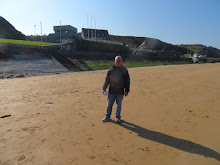
As I listen to the dull rumble of Rolling Thunder on the highways near my house, happy Memorial Day to all. JJ&D, I'll be running the Falls Church Memorial Day 3K fun run if you want to come and join in.
I want to recognize the service of all who have served to protect us and our way of life. It's too many to shout them all out individually so I'll just call out a few by name and contemplate the rest. A Tomb of the Unknown Soldier honor guard and a fellow I occasionally ran with, Adam Dickmyer (killed in Afghanistan in 2011).
My Dad (Peleliu and Okinawa) and Uncles Bill (Philippines), Bob (North Africa and Sicily) and Harry (Fast Carrier raids on Tokyo and the battles of the Philippine Sea). My Grandfather (North Atlantic in WWI).
Seymour (Battle of the Bulge), Rich (Korea) and practically all the fathers I encountered when I was growing up (WWII). My forebears who served the Union in the Civil War, my brother (Beirut 1983) and my several friends who served in Vietnam (Bill Hovanic lost a leg there), the Cold War and the Mid-East wars. Thanks.
Monday, May 27, 2013


Sunday, May 26, 2013
Boom.
Tomorrow is Memorial Day. I want to tell you about a 20 year old U.S. Marine who was fighting for his country in April 1945 on Okinawa, a long slender island a few hundred miles south of Japan that was being seized by an American armada as a staging point for the expected invasion of Japan to end WWII.
The Marine was a radioman and he was atop a ridge line in the pelting rain of an electrical storm, transmitting coordinates to offshore ships for their fire control. Suddenly there was a tremendous noise and he was stunned and momentarily lost the ability to move.
"I remember looking down and seeing sparks arcing between the radio and my fingertips," he said decades later. Lightning had struck his radio's fully extended antenna.
When his senses returned he checked himself out, determined that he was uninjured, got up and ambled about for a few minutes until his stupor wore off and then went back to work transmitting coordinates in the thunderstorm. That was one of the few stories that Marine ever told about the grim Pacific War.
The Marine was my Dad, who passed away in 1986 when I was in my early thirties. I still miss him terribly.
The Marine was a radioman and he was atop a ridge line in the pelting rain of an electrical storm, transmitting coordinates to offshore ships for their fire control. Suddenly there was a tremendous noise and he was stunned and momentarily lost the ability to move.
"I remember looking down and seeing sparks arcing between the radio and my fingertips," he said decades later. Lightning had struck his radio's fully extended antenna.
When his senses returned he checked himself out, determined that he was uninjured, got up and ambled about for a few minutes until his stupor wore off and then went back to work transmitting coordinates in the thunderstorm. That was one of the few stories that Marine ever told about the grim Pacific War.
The Marine was my Dad, who passed away in 1986 when I was in my early thirties. I still miss him terribly.
Saturday, May 25, 2013
Ker-plunk.
As we close in on Memorial Day, I want to tell you about a 19 year old U.S. Marine who was fighting for his life on the night of September 15, 1944 on Peleliu, a 3-mile by 6-mile island 500 miles east of the Philippines. That was the first day of the amphibious assault by the First Marine Division so we could wrest the airport on this coral speck from the Japanese and safeguard General MacArthur's right flank as he took back the Philippines.
The issue was in doubt that first night on Peleliu, and the Marine was in a foxhole not far from the beach as rounds passed by overhead, listening to the land crabs who shared the hole with him scuttle about. Suddenly something plunked into the hole from above in the darkness.
Grenade? The Marine clambered about the bottom of the hole frantically, feeling the ground with his hands for the object so he could pitch it back out.
"I was never so afraid in all my life," this strong, brave man said decades later. It turned out to be a coconut, clipped off an overhead tree by passing bullet.
That was one of the few stories that Marine ever told about the grim Pacific War. The Marine was my Dad, who passed away at age 61 in 1986.

Tuesday, May 21, 2013
Have A Nice Corporate Life, SunTrust Bank!
Remember when banks and S&Ls were your friends? When as a child you brought in a quarter a week for deposit into your Christmas club account and the tellers smiled and acted like they were glad to see you?
I went into a SunTrust branch near Union Station last week to buy some loose dollar coins for use in parking meters. They said they had unrolled dollar coins in their change drawer alright, did I have a SunTrust account?
"No." Smiling broadly, the teller said she couldn't (wouldn't) help me. Would I like to open an account?
I merely commented that I hoped CapitalOne branches treated SunTrust account holders the same way. Smiling as broadly as the teller, a man in a suit seated at a nearby desk wished me a nice day as I headed for the door.
I went into a SunTrust branch near Union Station last week to buy some loose dollar coins for use in parking meters. They said they had unrolled dollar coins in their change drawer alright, did I have a SunTrust account?
"No." Smiling broadly, the teller said she couldn't (wouldn't) help me. Would I like to open an account?
I merely commented that I hoped CapitalOne branches treated SunTrust account holders the same way. Smiling as broadly as the teller, a man in a suit seated at a nearby desk wished me a nice day as I headed for the door.
Sunday, April 14, 2013
Uncle Sam's Day
It was Cherry Blossom time in the District last week. The blooms, as usual, were spectacular.

I'm taking off tomorrow, tax day, to celebrate. After I donate blood for the 99th time in the morning, I'm going to have lunch at the Lost Dog Cafe in Westover at noon. Anyone who cares to is free to join me.


I'm taking off tomorrow, tax day, to celebrate. After I donate blood for the 99th time in the morning, I'm going to have lunch at the Lost Dog Cafe in Westover at noon. Anyone who cares to is free to join me.

Thursday, April 4, 2013
Richard II
Richard II by William Shakespeare. What a garden of words! wrote critic Walter Pater about the history in 1889. The noted playwright was acquiring the power of language with which he would later infuse the protagonists of his great tragedies, Othello, Macbeth, King Lear and Hamlet, with their heroic personalties, intriguing pathos and complex characters.
The process of welding language and thought into a single entity was well begun in Richard II, first performed in 1595, noted critic Richard D. Altick in 1947. The play, about a weak king addicted to flowery speech as the personification of life who ran headlong into a cold, calculating realist who stole his throne, is the tragedy of betrayal as well as that of fallen royalty, noted critic Derek Traversi in 1958. Altick observed that the play centers upon the violation of the laws of blood descent, Henry Bolinbroke’s usurpation of the crown of his cousin, Richard II, in 1399, which led but to the spilling of precious English blood, the coming decades of internecine warfare known as the Wars of the Roses.
The play is a riot of speech. Shakespeare’s kings are an eloquent lot, Pater pointed out, and in "no other play perhaps is there such a flush of those gay, fresh, variegated flowers of speech," depicting Richard as an exquisite poet if he is nothing else.
The play contains several references to reverenced England: a scept’red isle, earth of majesty, seat of Mars, other Eden, demi-paradise, fortress built by nature, none finer than that described by John of Gaunt, Bolingbroke’s father, Richard’s uncle:
This precious stone set in the silver sea
Which serves it in the office of a wall,
Or as a moat defensive to a house,
Against the envy of less happier lands,
This blessed plot, this earth, this realm, this England. II.i.46-50.
Bolingbroke, who becomes Henry IV by his deposition of Richard, is banished from the realm by the rightful king in the beginning of the play yet treasonously returns to stage a successful mutiny. Bad a king though he is, Richard notes that:
Not all the water in the rough rude sea
Can wash the balm off from an anointed king III.ii.54-55.
The right of linear descent disordered by Bolingbroke’s actions, the usurpation, will beget:
Armies of pestilence, and they shall strike
Your children yet unborn and unbegot III.iii.86-87.
The Bishop of Carlisle prophesies that as a result of Bolingbroke’s intrusion into the natural order:
The blood of English shall manure the ground,
And future ages groan for this foul act IV.i.137-138.
Some in the play, however, are honor bound, and in the finest homily Shakespear offers on the concept of honor, Mowbrey states upon also being banished at the play’s outset:
Mine honor is my life, both grow in one;
Take honor from me and my life is done. I.i.182-183.
Mowbrey honorably heads into permanent exile saying:
Then thus I turn me from my country’s light,
to dwell in solemn shades of endless night. I.iii.176-177.
But the deposing of a rightful king occurs after Bolingbroke collects an army upon his return and ultimately triumphs over Richard’s forces, dispirited by Richard’s ennui. The strange king knows that ultimately there will always be sad stories of the death of kings, for kings live with bread like you, feel want, taste grief, need friends:
And nothing can we call our own, but death
And that small model of the barren earth
Which serves as paste and cover to our bare bones. III.ii.152-155.
And when the new king states to the present Richard in the deposition scene that he thought Richard was willing to resign, the former king reveals a bit more of his pathetic, poetic character when he speaks back:
My crown I am, but still my griefs are mine:
You may my glories and my state depose;
But not my griefs; still am I king of those. IV.i.190-193.
Richard reflects cynically upon human crassness:
Showing an outward pity: yet you Pilates,
Have here delivered me to my sour cross,
And water cannot wash away your sin. IV.i.239-241.
He has already earlier vilified his former subjects, so readily loyal to an usurper as dogs so easily won to fawn on any man, to Scroop his treasurer, who thereupon characterizes the true nature of blissful love turned to blind hatred:
Sweet love, I see, changing his property,
Turns to the sourest and most deadly hate. III.ii.135-136.
Richard cannot live, for alive he presents too much danger to the usurper, and when the natural order is no more, and when time is broke and disordered, and the sounds of the clock striking are clamorous groans which strike at the heart, Richard famously utters his sorrow at his wastrel life. Indeed, it is commentary on the end of anyone's life:
I wasted time, and now doth time waste me. V.v.48.
Richard is murdered in his prison cell but first, perhaps for the first time in his life, he manfully rises up and kills some of his assailants. Henry IV faces down Richard II’s murderer, Exton, who did the deed pursuant to words he heard from the new king’s own mouth ("Have I no friend who will rid me of this living fear?"), and the regicide king says,
They love not poison that do poison need,
Nor do I thee; though I did wish him dead,
I hate the murderer, love him murdered. V.vi.38-40.
Richard, formerly taking his last leave of his wife, speaks a truism relevant here:
So two weeping together make one woe. V.i.86.
The process of welding language and thought into a single entity was well begun in Richard II, first performed in 1595, noted critic Richard D. Altick in 1947. The play, about a weak king addicted to flowery speech as the personification of life who ran headlong into a cold, calculating realist who stole his throne, is the tragedy of betrayal as well as that of fallen royalty, noted critic Derek Traversi in 1958. Altick observed that the play centers upon the violation of the laws of blood descent, Henry Bolinbroke’s usurpation of the crown of his cousin, Richard II, in 1399, which led but to the spilling of precious English blood, the coming decades of internecine warfare known as the Wars of the Roses.
The play is a riot of speech. Shakespeare’s kings are an eloquent lot, Pater pointed out, and in "no other play perhaps is there such a flush of those gay, fresh, variegated flowers of speech," depicting Richard as an exquisite poet if he is nothing else.
The play contains several references to reverenced England: a scept’red isle, earth of majesty, seat of Mars, other Eden, demi-paradise, fortress built by nature, none finer than that described by John of Gaunt, Bolingbroke’s father, Richard’s uncle:
This precious stone set in the silver sea
Which serves it in the office of a wall,
Or as a moat defensive to a house,
Against the envy of less happier lands,
This blessed plot, this earth, this realm, this England. II.i.46-50.
Bolingbroke, who becomes Henry IV by his deposition of Richard, is banished from the realm by the rightful king in the beginning of the play yet treasonously returns to stage a successful mutiny. Bad a king though he is, Richard notes that:
Not all the water in the rough rude sea
Can wash the balm off from an anointed king III.ii.54-55.
The right of linear descent disordered by Bolingbroke’s actions, the usurpation, will beget:
Armies of pestilence, and they shall strike
Your children yet unborn and unbegot III.iii.86-87.
The Bishop of Carlisle prophesies that as a result of Bolingbroke’s intrusion into the natural order:
The blood of English shall manure the ground,
And future ages groan for this foul act IV.i.137-138.
Some in the play, however, are honor bound, and in the finest homily Shakespear offers on the concept of honor, Mowbrey states upon also being banished at the play’s outset:
Mine honor is my life, both grow in one;
Take honor from me and my life is done. I.i.182-183.
Mowbrey honorably heads into permanent exile saying:
Then thus I turn me from my country’s light,
to dwell in solemn shades of endless night. I.iii.176-177.
But the deposing of a rightful king occurs after Bolingbroke collects an army upon his return and ultimately triumphs over Richard’s forces, dispirited by Richard’s ennui. The strange king knows that ultimately there will always be sad stories of the death of kings, for kings live with bread like you, feel want, taste grief, need friends:
And nothing can we call our own, but death
And that small model of the barren earth
Which serves as paste and cover to our bare bones. III.ii.152-155.
And when the new king states to the present Richard in the deposition scene that he thought Richard was willing to resign, the former king reveals a bit more of his pathetic, poetic character when he speaks back:
My crown I am, but still my griefs are mine:
You may my glories and my state depose;
But not my griefs; still am I king of those. IV.i.190-193.
Richard reflects cynically upon human crassness:
Showing an outward pity: yet you Pilates,
Have here delivered me to my sour cross,
And water cannot wash away your sin. IV.i.239-241.
He has already earlier vilified his former subjects, so readily loyal to an usurper as dogs so easily won to fawn on any man, to Scroop his treasurer, who thereupon characterizes the true nature of blissful love turned to blind hatred:
Sweet love, I see, changing his property,
Turns to the sourest and most deadly hate. III.ii.135-136.
Richard cannot live, for alive he presents too much danger to the usurper, and when the natural order is no more, and when time is broke and disordered, and the sounds of the clock striking are clamorous groans which strike at the heart, Richard famously utters his sorrow at his wastrel life. Indeed, it is commentary on the end of anyone's life:
I wasted time, and now doth time waste me. V.v.48.
Richard is murdered in his prison cell but first, perhaps for the first time in his life, he manfully rises up and kills some of his assailants. Henry IV faces down Richard II’s murderer, Exton, who did the deed pursuant to words he heard from the new king’s own mouth ("Have I no friend who will rid me of this living fear?"), and the regicide king says,
They love not poison that do poison need,
Nor do I thee; though I did wish him dead,
I hate the murderer, love him murdered. V.vi.38-40.
Richard, formerly taking his last leave of his wife, speaks a truism relevant here:
So two weeping together make one woe. V.i.86.
Tuesday, April 2, 2013
Classic
I went out running at noon on the Mall on Good Friday with two work running buddies, H and M. We wended our way through large throngs of tourists to the Washington Monument, enroute to the Lincoln Memorial, when I spotted a man carrying a large cross in a crowd of pilgrims and I stopped to snap a picture.
I lost my two running companions. I have no idea where they went but after looking for them on the route ahead, and the place where I stopped, and the route back to work, I gave up and headed back towards the office, mad at myself for losing them because of my impulsive action.

How can you stay mad while running? As I approached the Capitol going back, I scrutinized the imposing prominence of Capitol Hill rising in the distance. In the olden times I charged up that hill three times in the last mile of a fast 10K race, the venerable Capitol Hill Classic, back before I a chronic, nagging injury slowed me, back when I was younger and quicker.
Why not, I thought, do the last mile of that mile of that race right now and push it hard! So I did, charging up the prominent third of a mile rise, acquiring the level street above and darting down the diagonal street to Stanton Square, finishing strong in front of the school there.
As I trotted back the further half mile to return to work, I was happy to partake, at least for about eight breathless minutes, in memories of times gone by but not entirely gone. At work I encountered my two friends, who had looked for me everywhere out there (except in my past), relieved to see me returned to work in apparently fine fettle.
I lost my two running companions. I have no idea where they went but after looking for them on the route ahead, and the place where I stopped, and the route back to work, I gave up and headed back towards the office, mad at myself for losing them because of my impulsive action.

How can you stay mad while running? As I approached the Capitol going back, I scrutinized the imposing prominence of Capitol Hill rising in the distance. In the olden times I charged up that hill three times in the last mile of a fast 10K race, the venerable Capitol Hill Classic, back before I a chronic, nagging injury slowed me, back when I was younger and quicker.
Why not, I thought, do the last mile of that mile of that race right now and push it hard! So I did, charging up the prominent third of a mile rise, acquiring the level street above and darting down the diagonal street to Stanton Square, finishing strong in front of the school there.
As I trotted back the further half mile to return to work, I was happy to partake, at least for about eight breathless minutes, in memories of times gone by but not entirely gone. At work I encountered my two friends, who had looked for me everywhere out there (except in my past), relieved to see me returned to work in apparently fine fettle.
Subscribe to:
Posts (Atom)